It’s Not “No One Wants Non‑USD Stables” — It’s “No Banks Want Non‑USD Inventory”
The stagnant growth of non-USD stables has often been dismissed as a failure of demand. I disagree. The demand for non-USD cross-border settlement is massive—historically clocking in at $320B+ daily in "non-major" FX flows. Instead of framing this as a demand-side failure, I would argue that it is a supply-side crisis caused by a breakdown in global banking incentives, as the introduction of Basel III after 2008 and some stringent banking regulations impose strict capital requirements on banks, based on their balance sheet composition.
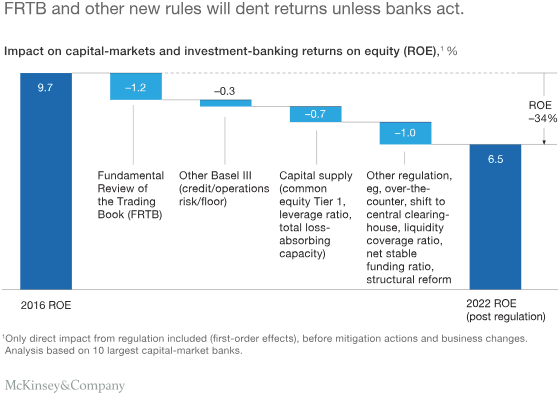
In this article, I am going to deep-dive into the reason of how bank regulations become the main driving force of the liquidity deficiency in non-USD corridors. My thesis is, since the global FX market is structurally broken outside the G7, causing a 'Liquidity Vacuum' in non-USD cross-border settlement, in order to solve the liquidity issue of non-USD stables, we need a DeFi-native way for liquidity bootstrapping of non-USD stables. Any on-chain FX solution that relies on the traditional FX market is clearly doomed.
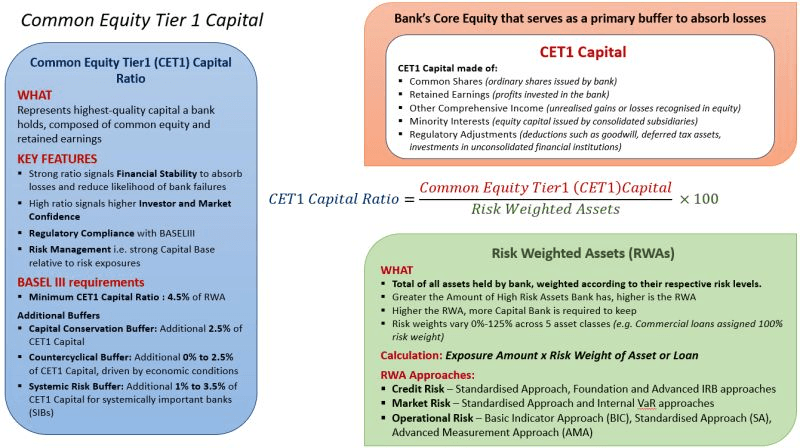
1. The Basel III Hammer (expanded): LCR is a currency-and-entity constraint, not just a “liquid assets” rule
What is Basel III? Basel III is an international regulatory framework to make banks more resilient by improving capital, liquidity, and risk management. It does so by imposing stricter requirements for high-quality capital to act as a loss buffer, introducing leverage limits (leverage ratio), and setting global liquidity standards (LCR and NSFR) to prevent excessive risk-taking and reduce the chance of future banking crises.
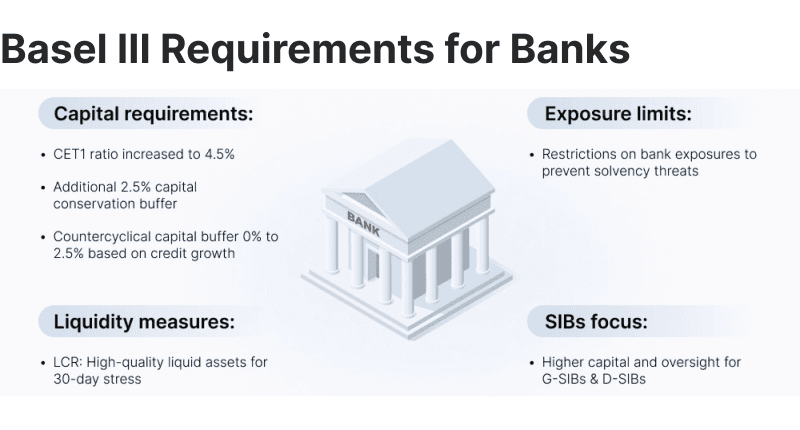
How does Basel III turn FX market-making into a multi-constraint optimisation. The Liquidity Coverage Ratio (LCR) is the primary weapon here. It forces a bank to hold a stock of "High-Quality Liquid Assets" (HQLA) sufficient to survive a 30-day stress scenario. Seemingly a prudent safety rule, but in practice, it acts as a regulatory blockade against non-USD market making.
1.1 LCR’s core bias: HQLA is defined by market depth under stress, not by “what people use”
The LCR forces a bank to hold an adequate stock of unencumbered HQLA that can be converted into cash “easily and immediately” in private markets to survive a 30‑day stress scenario.
Crucially, Level 1 HQLA is tightly defined. It includes (among other items):
- cash (coins and banknotes),
- central bank reserves (only to the extent central bank policies allow them to be drawn down in stress), and
- certain marketable sovereign/central bank/PSE/multilateral development bank securities that meet conditions like 0% standardised credit risk weight and being traded in “large, deep and active” markets even under stress.
It means reserve-currency safe-asset complexes (like $USD, $JPY, $EUR) are structurally advantaged, because they have:
- globally deep repo/cash markets,
- reliable liquidity in stress,
- and fewer constraints on convertibility/transferability.
Because the "safe asset" complexes of reserve currencies are the only ones that reliably meet the strict definition of HQLA, banks are incentivised to hold their liquidity buffers in USD. To trade BRL/MXN, a bank needs to hold inventory in those currencies, but that inventory is often "bad" for LCR purposes, forcing the bank to hold additional USD assets to compensate.
1.2 “One currency LCR” is the myth; supervisors watch the currency mismatch
Basel explicitly says the LCR is met “in one single currency,” but banks and supervisors should also monitor the LCR in significant currencies to capture currency mismatch risks. A currency is “significant” if liabilities in that currency are ≥ 5% of total liabilities.
Two implications for EM corridors:
- You can’t hand-wave FX conversion in stress. Supervisors assess the bank’s ability to raise funds in forex markets and to transfer liquidity surplus across currencies/jurisdictions/legal entities.
- Even if the group LCR is fine, your BRL/MXN desk can be seen as a mismatch generator that needs governance, limits, and buffers.
This is where “non‑USD stable demand” hits a wall: demand is in the unit of account; prudential liquidity is in what’s credible under stress.
If a desk wants to run a BRL/MXN book, it creates liabilities in those currencies. The supervisor may demand that the bank holds liquidity in those specific currencies to match. Since BRL and MXN assets are not level 1 HQLA, the desk is hit with a "governance tax"—higher limits, buffers, and scrutiny than a desk trading USD/EUR.
1.3 The killer detail: liquidity transfer restrictions make HQLA “trapped”
In consolidated LCR, excess liquidity should not be recognised if there is reasonable doubt about availability. Transfer restrictions—ring‑fencing, non‑convertibility, FX controls—reduce the ability to move HQLA and funding within a group. If HQLA sits in excess of local outflows and is not transferable, that surplus should be excluded from the consolidated metric.
If a global bank has a surplus of cash in its Brazilian entity, but Brazil has capital controls, ring-fencing rules, or operational friction that prevents moving that cash to London instantly:
- That cash does not count toward the global group’s liquidity buffer.
- The London desk cannot rely on the Brazil desk’s inventory.
Why does this matters for non‑USD corridors? To support a corridor, a bank often needs local entities, local accounts, local liquidity. If that liquidity is recognised trapped (legally, operationally, or politically), the bank must behave as if it’s unavailable elsewhere. This forces the bank to "double fund"—holding trapped liquidity locally plus redundant liquidity centrally—making the corridor structurally “expensive” compared with USD-centric plumbing.
1.4 HQLA is not “what you can sell”; it’s “what you can monetise without blowing up solvency”
Basel notes that in some jurisdictions, large/deep repo markets do not exist for eligible assets, so HQLA monetisation may rely on outright sale. In that case, banks should exclude assets where there are impediments to sale (eg fire‑sale discounts that would breach solvency, or requirements to hold statutory minimum inventory).
Hence, even if an EM sovereign bond looks liquid on a normal Tuesday, it may be disqualified from the liquidity buffer because selling it during a panic would destroy banks’ capital ratios. So, the desk ends up being told: “If it’s not stress-monetisable, it’s not a liquidity buffer.” That pushes liquidity buffers further back toward the reserve-currency stack.
1.5 The Official Admission: Alternative Liquidity Approaches (ALA)
Basel explicitly admits that some currencies simply do not have enough HQLA to support the banking system. The framework offers "Alternative Liquidity Approaches" (ALA) for these jurisdictions with insufficient HQLA. One pathway allows banks to use foreign currency HQLA to cover domestic-currency shortfalls—but with haircuts (at least 8% for major currencies, higher for others) plus explicit controls around FX risk. This shows that:
- regulators understand “some currencies don’t have enough HQLA capacity,” and
- the sanctioned workaround is “use foreign HQLA, but pay a haircut and manage mismatch risk.”
This is an implicit regulatory admission that non-USD liquidity is structurally capacity-constrained. The sanctioned workaround is literally: "Use USD, but we will charge you a penalty for the mismatch." It institutionalizes the USD as the backstop for EM trades.
In sum, LCR under Basel III creates a specific capital tax on non-USD inventory
- Non‑USD inventory consumes balance sheet and creates liquidity outflows (margin calls, settlement funding needs, stress assumptions) that must be funded.
- The LCR incentivises banks to fund those risks with HQLA that is demonstrably liquid under stress—which, systemically, concentrates in reserve-currency safe assets.
- When liquidity becomes legally/operationally trapped across entities/currencies, the bank cannot count it centrally, increasing the effective “tax” of maintaining the non-USD corridor.
The system is designed to reward the "Hub-and-Spoke" model. A bank that triangulates through USD is swimming with the current of regulatory physics; a bank that tries to build a direct BRL/MXN bridge is drowning in it.
2. Basel Market Risk / FRTB: Capital is Directly Coded to Favour Liquid FX Pairs
Even if banks can neglect the inventory problem (LCR), they face a second, equally brutal constraint: Market Risk Capital.
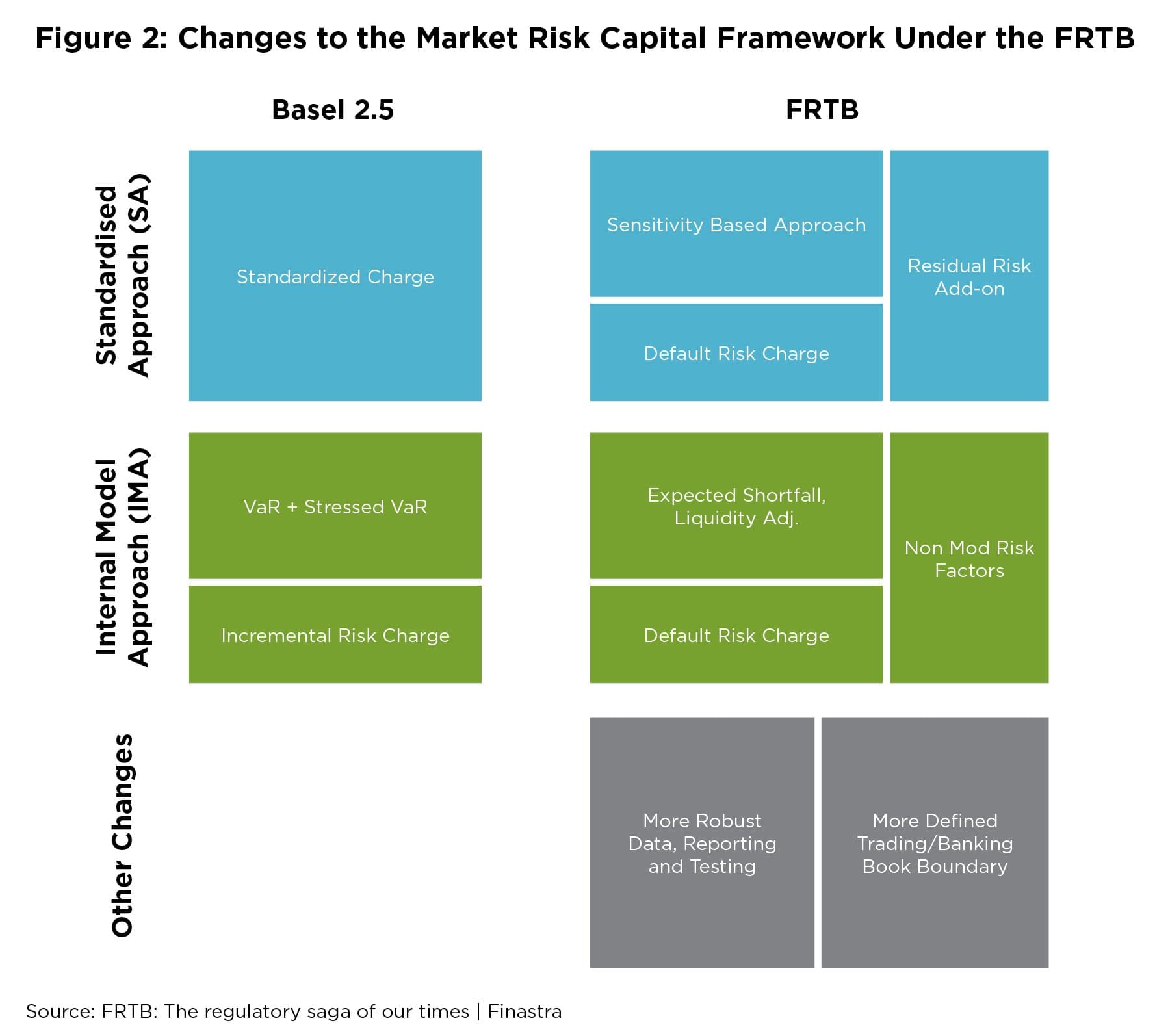
Under the Basel framework—specifically the Fundamental Review of the Trading Book (FRTB)—banks must hold sufficient amount of capital to absorb potential losses from market movements. The framework does not treat all currencies equally. It explicitly penalizes "thin" markets, creating a regulatory feedback loop that makes non-USD corridors capital-inefficient to touch.
2.1 Liquidity Horizons: The "Time Tax" on Emerging Markets
Capital requirements are calculated based on risk models (like Expected Shortfall) that simulate how much money a bank could lose during a market crash. A key input in these models is the Liquidity Horizon: how long regulators assume it will take the bank to sell a position without crashing the price.
Under the FRTB market risk framework, the internal models approach embeds liquidity horizons by a risk factor. The implication is, a longer holding period assumed in the risk framework results in a significantly larger "potential loss" number, which then requires a larger capital buffer.
If a corridor is not in the “specified” set (or a first‑order cross), the framework assumes it takes 20 days as the liquidity horizons, twice as long to exit risk in stress—and charges capital accordingly.
- 10 Days: Assigned to “Foreign exchange (FX) rate: specified currency pairs.” These are the highly liquid pairs (e.g., USD/EUR, USD/JPY).
- 20 Days: Assigned to “FX rate: currency pairs” (i.e., the remainder).
Hence, when a bank calculates risk for a BRL/MXN corridor (an "unspecified" pair), the model is forced to assume the bank is stuck with that risk for twice as long (20 days) as a major pair (10 days) during a crisis. This acts as a capital surcharge on non-USD inventory, making it structurally cheaper for banks to hold USD/EUR risk than it is to hold BRL/MXN risk, simply because the regulator assumes the latter can be liquidated slower, requiring banks to have more capital buffers.
2.2 Supervisors Can Make It Harsher: The Floor, Not the Ceiling
More importantly, the 20-day horizon for niche pairs is just a floor. FRTB explicitly allows liquidity horizons to be increased desk-by-desk relative to the table. Supervisors have the discretion to demand longer horizons if they believe a specific corridor is risky or illiquid.
This introduces regulatory uncertainty. If a bank attempts to build a market in a volatile corridor (e.g., NGN/ZAR), a supervisor can arbitrarily increase the liquidity horizon to 40 or 60 days. In other words, the more a corridor looks like “exotic EM risk,” the more likely it is to get longer horizons, and hence even a higher capital budget. This creates an unquantifiable risk for the bank's capital planning, incentivising them to stick to "specified" pairs where the regulatory treatment is predictable and capped at 10 days.
2.3 The Non-Modellable Risk Factors (NMRF)
Banks prefer to use their own internal models to calculate capital buffers because these models usually result in lower capital charges than the standardised checklist. However, to use an internal model for a specific corridor, the bank must prove the market is "real." This is the Risk Factor Eligibility Test (RFET). To pass, a risk factor (e.g., the BRL/MXN exchange rate) must have at least 24 real price observations per year (roughly two per month) with a maximum gap of one month between observations.
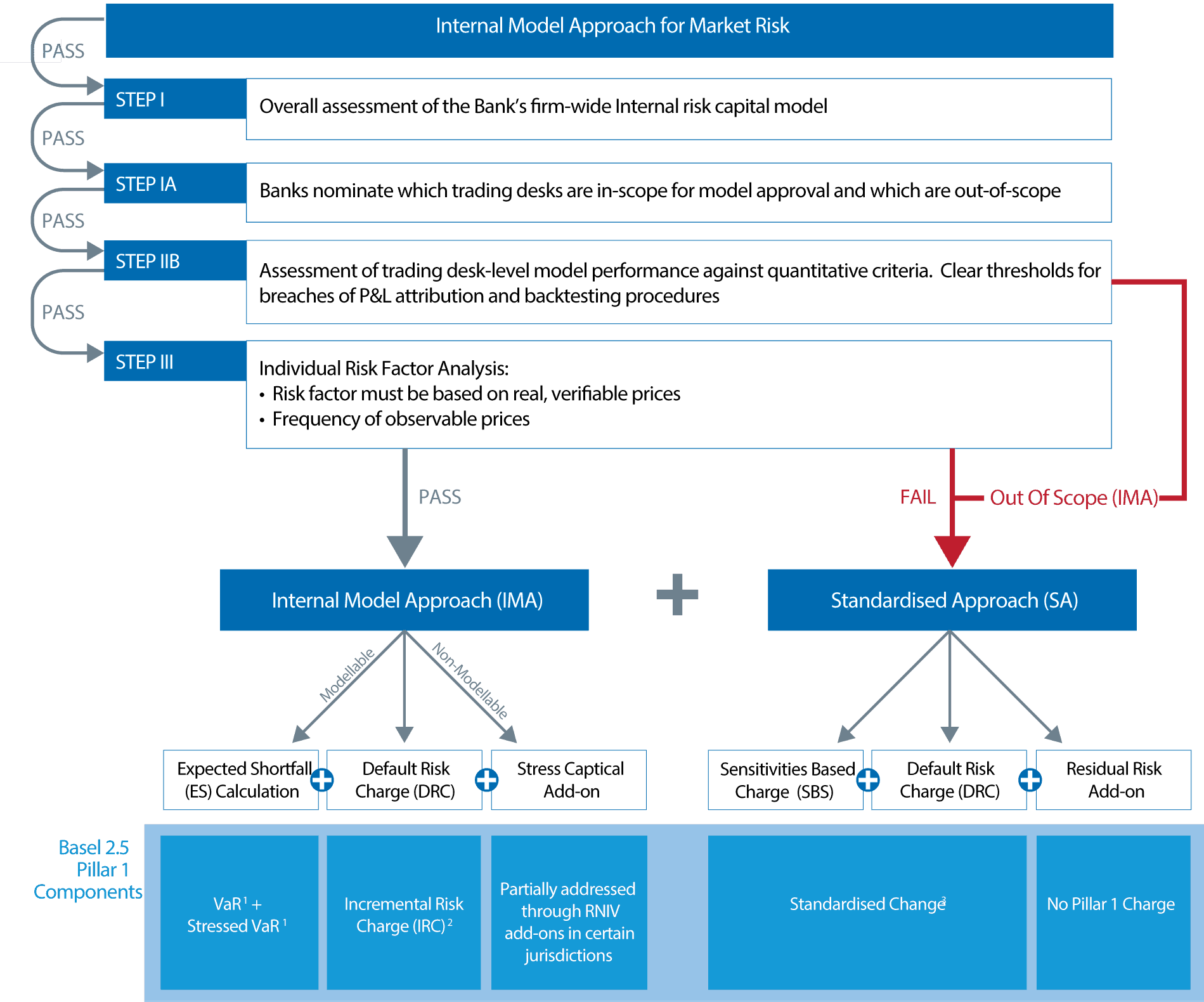
If a corridor is "thin" (trades infrequently), it fails the RFET and then classified as a Non-Modellable Risk Factor (NMRF). Being an NMRF is a capital disaster, because other than using a more capital-efficient model, banks must calculate capital based on a stress scenario.
The capital charge for an NMRF is punitive. The framework mandates that for each NMRF, the stress scenario liquidity horizon must be the greater of the assigned horizon and 20 days.
This creates a vicious feedback loop for non-USD corridors:
- Volume is low: The corridor trades infrequently.
- Fails RFET: The pair is classified as an NMRF.
- Capital spikes: The bank is forced to hold "stress scenario" capital against the pair, making the trade unprofitable.
- Bank exits: The bank stops quoting the pair to reduce the capital cost and maintain a higher financial leverage.
- Volume drops further: The corridor becomes even less liquid.
This mechanism effectively kiils banks' presence in EM corridors: banks cannot afford to make a market in an illiquid pair until it is already liquid.
3. The G-SIB Penalty: Corridors Increase "Infrastructure Criticality"
G-SIBs are subject to extra capital surcharges based on how dangerous their failure would be to the global economy. This creates a perverse incentive: banks are actively incentivised to shrink their complexity and global footprint.
3.1 The Scorecard: A Five-Factor Model
The G-SIB methodology is not just about "how big are you?" It is a five-factor model where each category carries a 20% weight. The categories are:
- Size
- Cross-jurisdictional activity
- Interconnectedness
- Substitutability/Financial Institution Infrastructure
- Complexity
A direct non-USD corridor (e.g., providing liquidity for BRL to MXN) is a "triple threat" to this scorecard. It disproportionately inflates Cross-jurisdictional activity, Substitutability, and Complexity. While a USD-centric model streamlines operations into a single "hub," a network of direct corridors looks like a messy web of global entanglements—exactly what regulators are trying to penalise.
3.2 Cross-Jurisdictional Activity: The Cost of "Sprawl"
This factor measures a bank’s global footprint via claims and liabilities outside its home jurisdiction. The regulatory intuition is simple: if a bank operates in 50 countries with local balance sheets in each, its resolution (bankruptcy) becomes a nightmare of competing legal systems.
For instance, a US bank trading USD/BRL books the trade in New York. The liability is domestic. To offer a robust BRL/MXN corridor, the bank often needs to hold balances in Brazil and Mexico to settle locally. Every additional corridor you support requires local funding lines, local settlement accounts, and local liquidity buffers. This increases the bank's "cross-jurisdictional" score.
Even if the financial risk is small, the operational sprawl is large. Banks are incentivised to retreat to their home jurisdiction (or major hubs like London/NY) and trade everything against the USD to minimise this "sprawl score." This is also why correspondent banking creates excessive time lags for cross-border transactions, because most local banks need to get through layers to connect to these banks who hold enough liquidity for settlement.
3.3 Substitutability: The Penalty for Being "Unique"
The Substitutability category measures how difficult it would be to replace the bank if it failed. It includes payment activity and trading volume as scored indicators.
This is the most ironic constraint. In normal business, being the "only game in town" is a competitive advantage. In the G-SIB regime, it is a liability. If Bank X is the only provider of liquidity for the BRL-MXN corridor, Bank X is now "critical infrastructure." If Bank X fails, trade between Brazil and Mexico freezes. Regulators will assign a higher score (and thus higher capital costs) to banks that provide unique, hard-to-replace services.
Providing niche corridor settlement is not viewed by regulators as a helpful service, but a systemic risk concentration. A bank might look at a niche corridor and say: "We dominate this market, but the G-SIB points we accrue for being the 'sole provider' are pushing us into a higher capital bucket. Let’s shut it down and just trade USD."
3.4 Complexity: The OTC Derivative Weighting
Non-USD corridors are often illiquid in spot markets, forcing banks to use OTC derivatives (FX swaps, cross-currency swaps) to manufacture liquidity. The G-SIB model heavily penalises the notional amount of OTC derivatives. Triangulating via USD (Spot BRL/USD + Spot USD/MXN) is often treated as simpler and more netted down than maintaining a book of complex cross-currency derivatives to bridge illiquid pairs directly.
3.5 The Surcharge is Real Money (CET1)
Why do these points matter? Because they translate directly into Common Equity Tier 1 (CET1) capital requirements. G-SIB surcharges are tiered.
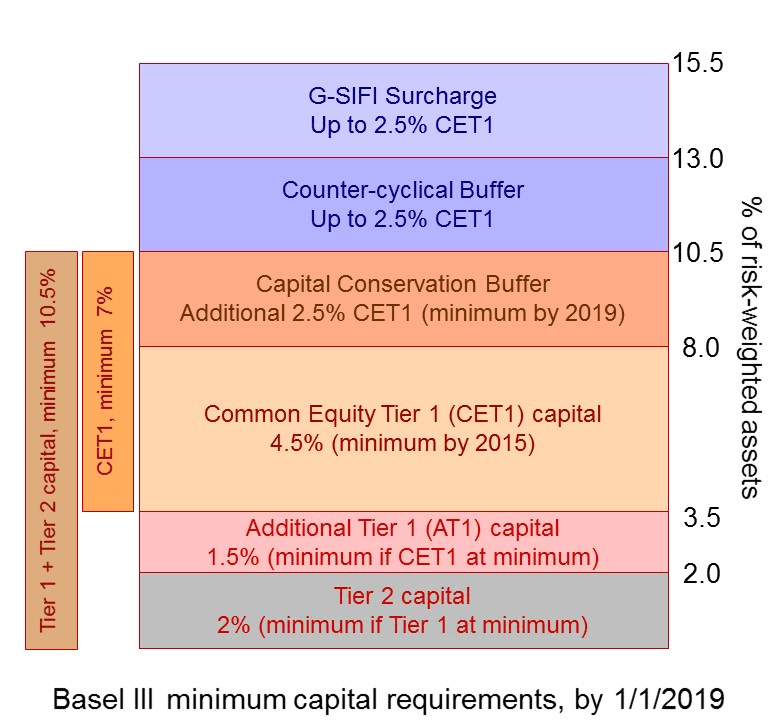
Moving from "Bucket 1" to "Bucket 2" might increase a bank's required capital buffer by 0.5% of total Risk-Weighted Assets (RWA). For a bank with $1 Trillion in RWA, that is a $5 Billion capital call. While the BRL/MXN desk might generate $50 million in annual profit, if that desk’s activity (via complexity and cross-jurisdictional score) tips the bank into the next G-SIB bucket, it could trigger a multi-billion dollar capital requirement. The opportunity cost of multi-billion dollars is self-explanatory.
The bank is not "ignoring" the profit of the corridor. It is calculating that the Return on Regulatory Capital is negative. Bank are willing to sacrifice niche revenue to avoid the "step-up" costs of a higher systemic footprint.
The G-SIB regime effectively tells banks: "Be big in vanilla things (USD), but do not be essential in complex things (Niche Corridors)." The Global FX market is structurally broken outside the G7. Direct bilateral liquidity between EM currencies is effectively non-existent, creating a 'Liquidity Vacuum' in non-USD cross-border settlement. This forces liquidity back into the USD hub-and-spoke model because that model is standardised, highly substitutable (everyone does it), and nets down efficiently. The "liquidity issue" of non-USD corridors is not just a lack of buyers and sellers; it is that the infrastructure required to connect them is taxed out of existence by the G-SIB scorecard.
Summary
The "liquidity issue" of non-USD corridors was never about a lack of trade interest; it was about the prohibitive cost of the legacy "trust infrastructure" required to connect them. For decades, we relied on a correspondent banking network that is now retreating under the weight of its own regulatory scorecard. We asked banks to be the bridge, but the G-SIB penalty made the toll too high. As long as we rely on balance sheet-constrained institutions to hold the inventory for global trade, non-USD corridors will remain fragmented, expensive, and slow.
Sticking with Skeuomorphism never works for the on-chain FX, especially for non-USD stables outside of G7, and we need more DeFi-native innovation to bootstrap non-USD stables liquidity. Any on-chain FX solution that relies on the traditional FX market is clearly doomed.

